

“Sustainability is about designing systems that are regenerative, fair, and resilient. It is about creating economies where people and businesses can thrive within the planet’s limits.”
Andrea began her journey at NewForesight as a junior analyst and worked her way up to Senior Consultant. After leaving the organisation in 2022 to continue shaping sustainable value chains across Europe and Africa, she returns to NewForesight as a Principal Consultant, bringing with her a global perspective, a deep commitment to systems change, and a clear understanding that sustainability must move from ambition to action.
We sat down with her to reflect on what has changed in the sustainability landscape, what Africa can teach the world about systems transformation, and why now is the time to move beyond ambition and into real, collective impact.
In this three-part conversation, Andrea reflects on her journey across Europe and Africa, the evolution of sustainability over the past decade, and what it will take to truly “change the game.”
1 |
Welcome back, Andrea! NewForesight knows you quite well but tell our readers/listeners a bit about yourself.
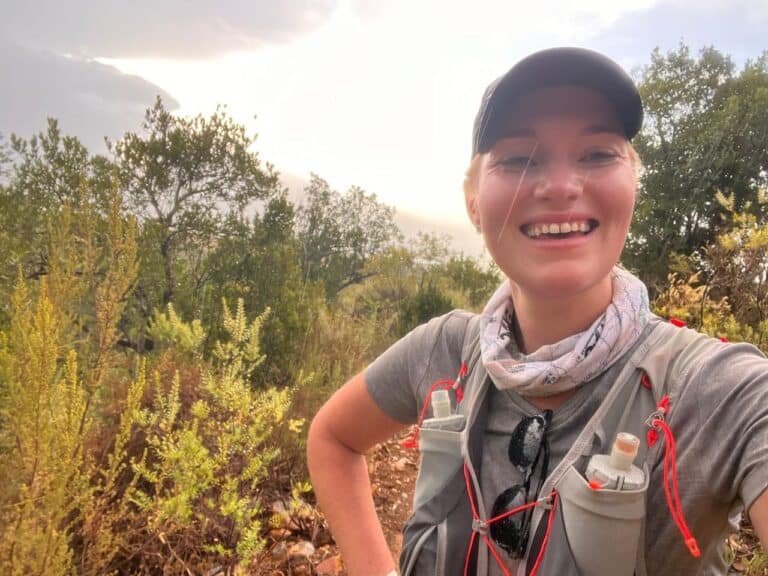
I’m a South African, a sustainability professional, a trail runner, and a woman on a mission.
I started out studying Forensic Accountancy and spent two years as a forensic investigator in Johannesburg before heading to the Netherlands to continue my studies. That’s where I discovered my passion for sustainability, which was still a niche field back then, and it ultimately led me to NewForesight.
I spent five years building sector initiatives in agriculture and developing market-driven sustainability strategies for FMCGs.
From there, I moved to KPMG Netherlands to deepen my work on sustainable value chains, and later joined Group Sustainability at Rabobank, where I focused on developing and implementing sustainability policies across the bank.
After nearly nine years in the Netherlands, I felt the pull of home. I returned to South Africa in 2024 to begin my next chapter: rejoining NewForesight to contribute to meaningful and sustainable change… and becoming the strongest trail runner I can be!
2 |
How does it feel to come back to NewForesight at this stage in your career? What drew you back?
“At a time when incremental change is no longer enough, NewForesight is clear about what is needed: to accelerate transitions and challenge the rules of the game.”
Even though I left NewForesight a few years ago, it never really left me. Its mission and mindset stayed with me: the belief that every action ripples through the system, that real change requires intention, and that your greatest contribution is being unapologetically yourself.
I once read that if NewForesight were a person, it would be someone who is curious and bold, learns fast, quick to act and slow to give up. Someone who speaks frankly, laughs easily, is dedicated to its mission, and stands steady when the storm hits. Someone who expects a lot from you, because they expect even more from themselves. That description resonates deeply with me. It reflects a place I’m proud to be connected to, and one that feels worth returning to.
I also came back because the work NewForesight does feels more relevant now than ever. At a time when incremental change is no longer enough, NewForesight is clear about what is needed: to accelerate transitions, challenge the rules of the game, and help build a sustainable economy. We don’t just advise within existing systems; we push our partners, clients and ourselves, to rethink models, strategies, and incentives, and to lead with integrity, courage, and long-term intent.
NewForesight is a place where the mission is owned collectively, where leaders are grown together, where honesty and solidarity matter, and where everyone contributes their own chapter to a bigger story. That clarity of purpose, combined with the people and the ambition, makes this a place I’m proud to return to at this stage in my career.
3 |
What drives your passion for sustainability and systems change?
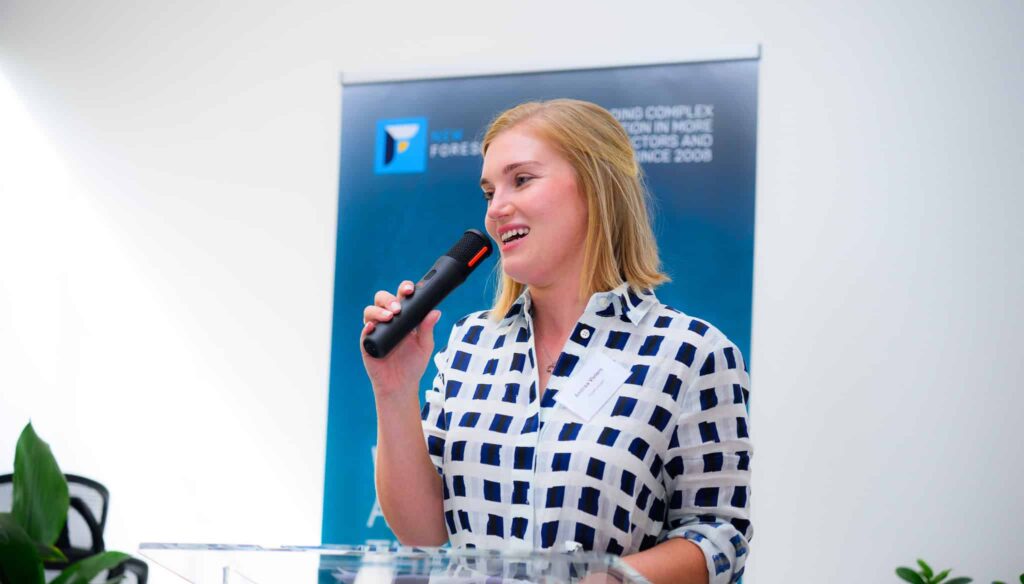
My passion for sustainability and systems change really starts with Africa, and South Africa in particular.
The challenges here are demanding, interconnected, and at times messy, but they also hold incredible possibility.
This is a place where resilience, complexity, and opportunity intersect, and it has shaped not only how I see the world, but also my commitment to helping build a more equal society a society where opportunities are fair and where more people can live dignified lives with access to the basics that allow people to thrive.
I’ve always been driven by a desire to make things better and ensure those improvements actually last.
I think long-term and gravitate toward the bigger issues: the underlying patterns and the broader dynamics that sit beneath the surface.
In many ways, sustainability isn’t just a career for me; it’s where my appreciation for complexity, my drive for meaningful improvement, and my commitment to this continent and its people all meet.
“Sustainability isn’t just a career for me it’s where my commitment to Africa and my drive for meaningful change meet.”
4 |
You’ve worked in both Europe and Africa. How do you see sustainability challenges differing between these contexts?
I think the sustainability challenges in Europe and Africa are quite different, but also deeply connected.
In Europe, sustainability has really moved into the mainstream. There’s strong regulation, consumer awareness, and a big focus on transforming existing systems, such as decarbonization, circularity, and accountability.
The challenge is making those transitions fair and affordable while maintaining momentum within mature, complex economies.
In Africa, the sustainability conversation is more focused on growth and resilience, especially ensuring energy access, food security, and job creation.
There’s incredible innovation happening, from renewable energy solutions to regenerative agriculture and inclusive business models.
The challenge is scaling these efforts in a way that supports livelihoods and strengthens local economies, while also dealing with infrastructure gaps and governance constraints.
5 |
What can the global sustainability community learn from Africa’s approach to systems change?
“True systems change is built on relationships, adaptability, and shared ownership.”
What really stands out to me about Africa’s approach to systems change is the way people come together, not because a formal structure tells them to, but because they have to.
There is often an urgency and a shared sense of purpose that drives collaboration across sectors, communities, and even competitors.
In many cases, systems change in Africa doesn’t start with perfectly designed frameworks or strategies. It starts with people recognizing that solving big challenges like food security, climate resilience, or energy access requires working together.
You see partnerships forming organically, driven by necessity, trust, and a sense of collective responsibility.
Africa shows that progress can happen when collaboration leads even before the structure is fully in place.
Looking ahead….
Andrea’s journey across continents has also given her a front-row seat to how sustainability itself has evolved over the past decade.
What was once a niche conversation has become central to business strategy, regulation, and investment. Yet despite this progress, many organisations still struggle to translate ambition into real, measurable change.
In Part 2 of this series, Andrea reflects on how the sustainability landscape has shifted and why moving from strategy to implementation remains one of the biggest challenges today.